Bought a pack of henna that left your hair a strange colour, felt gritty, or smelt of chemicals? You are not alone. Henna is one of the oldest natural hair colours in the world, but not every pack labelled “henna” contains only henna.
Some powders are mixed with sand to add weight. Some contain added dyes to make the colour darker or faster. And some products sold as “black henna” are not really henna at all.
The good news is that you do not need a laboratory to spot most problems. In this guide, we explain how to check pure henna powder with seven simple tests, what pure henna should look, smell and feel like, and which documents buyers should ask for when sourcing henna in bulk.
What Is Pure Henna Powder?
Pure henna powder is made from the dried, ground leaves of one plant: Lawsonia inermis. Nothing else.
The colour comes from a natural dye molecule in the leaves called lawsone. When henna paste sits on hair, lawsone slowly binds to the keratin in each strand and leaves a warm red-orange stain.
That gives us the most important rule of this whole article:
Pure henna only ever gives red, orange, copper or auburn tones. It never turns hair black or dark brown on its own.
If a product promises jet-black hair from “henna” alone, something else is inside the pack. Natural black results come from combining henna with a second plant, indigo, which we cover in our guide to using henna and indigo for black hair.
Why Henna Powder Gets Adulterated
Before the tests, it helps to know what you are looking for. The most common problems in low-quality henna are:
- Sand, soil or stalk powder: cheap fillers that add weight and reduce the dye content.
- Old or poorly stored leaves: natural henna loses its dye strength over time, especially in heat and humidity.
- Added synthetic dyes: used to make the colour darker or faster.
- PPD (para-phenylenediamine): a chemical hair dye sometimes mixed into “black henna” products.
- Metallic salts: found in some older “compound henna” products, and known to react badly with chemical hair treatments.
Now let’s look at how you can check for each one.
7 Simple Tests to Check If Henna Powder Is Pure
1. Read the Ingredient List First
This is the quickest test and often the most revealing.
Pure henna should list only one ingredient, usually written as Lawsonia inermis (henna) leaf powder. If the pack also contains indigo, it should say so clearly, for example Indigofera tinctoria leaf powder.
Be careful if the label:
- lists names you do not recognise or chemical-sounding ingredients
- has no ingredient list at all
- says “black henna” or promises black results in one step
- says “henna-based” without explaining what else is inside
A product does not have to be bad because it is a blend, but you should always know what you are buying.
2. Check the Colour of the Powder
Fresh, good-quality henna powder is usually green, khaki or greenish-brown. The exact shade varies with the crop and region, but it should look like a dried leaf powder.
Warning signs include:
- Dark brown or black powder: henna leaves are not naturally this colour.
- Very grey or dull brown powder: may suggest old leaves, poor storage or fillers.
- Bright, unnatural colours: may suggest added dyes.
3. Smell It
Pure henna has an earthy, grassy smell, a bit like hay or dried tea leaves. Some people describe it as “green”.
A strong chemical smell, a perfume-heavy smell or no smell at all can be warning signs. A total loss of aroma can mean the powder is old and has lost dye strength.
4. Feel the Texture
Rub a small pinch of powder between your fingers. Good henna for hair should feel soft, fine and smooth, almost like flour.
If it feels gritty or sandy, the powder may be poorly sifted or mixed with sand. Fine sieving matters because gritty powder is harder to rinse out of hair and gives an uneven paste.
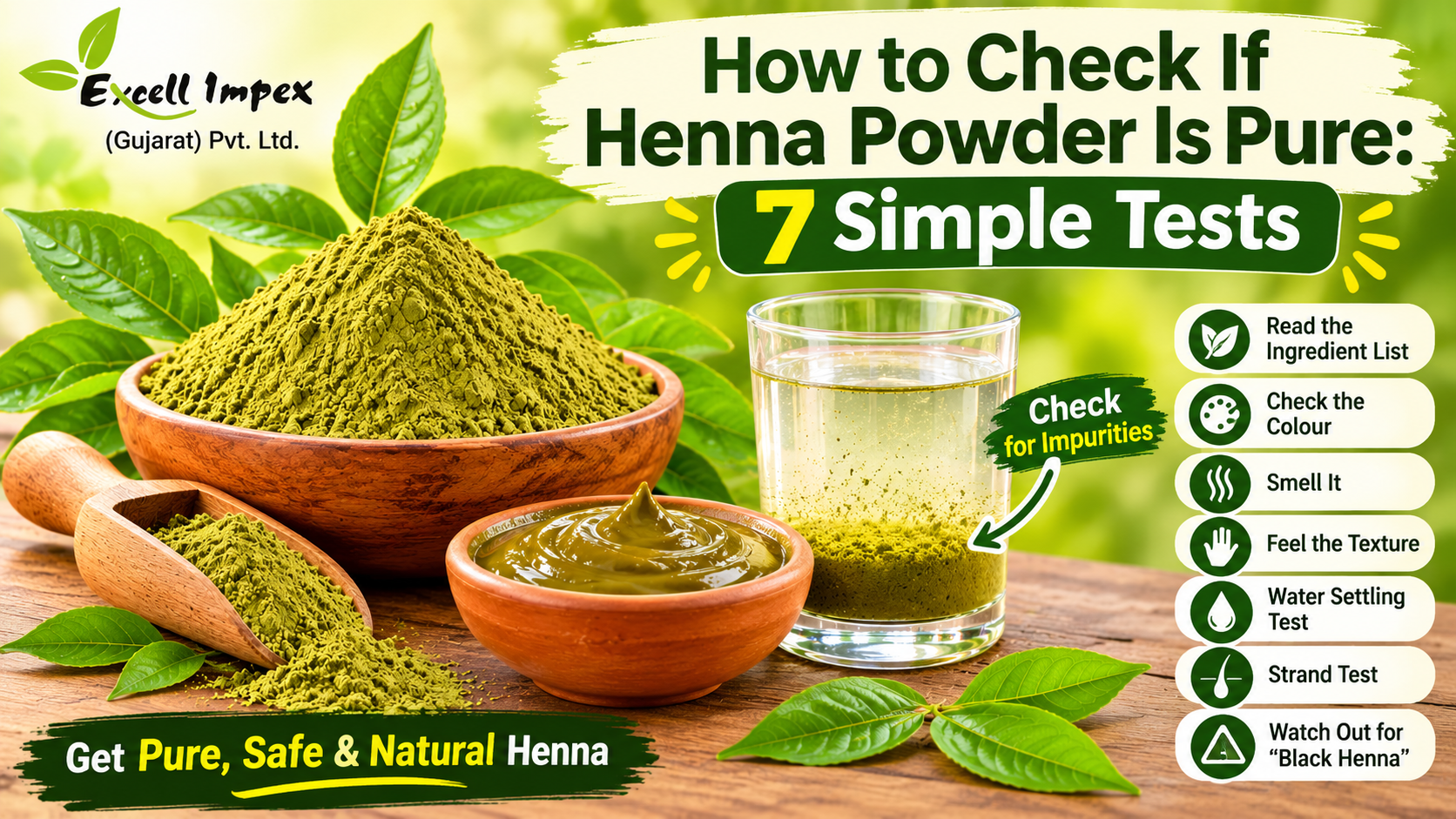
5. Do the Water Settling Test (for Sand)
This is an easy home test for sand or soil.
- Fill a clear glass with water.
- Sprinkle in about a teaspoon of henna powder and stir.
- Wait 10–15 minutes and look at the bottom of the glass.
Plant powder takes time to soak and settle and tends to stay cloudy in the water. Sand and soil sink quickly and form a heavy, gritty layer at the bottom. A thin layer of sediment is normal; a thick layer of sand is not.
6. Do a Strand Test
A strand test tells you more about henna than any other home check, and it is also the best way to preview your final colour.
- Collect some hair from your hairbrush, or ask a salon for a small sample. Light or grey hair shows the result most clearly.
- Mix a small amount of henna paste and let it rest until the dye releases (this can take a few hours, depending on temperature).
- Coat the hair sample with paste and leave it for the same time you plan to use on your head.
- Rinse with water and let it dry.
What pure henna does: the hair turns orange or copper, and the colour deepens slightly over the next one to two days as it oxidises.
What should make you suspicious: hair that turns black or very dark brown within minutes, or colour that is dull and weak even after a long application.
7. Watch Out for “Black Henna”
This deserves its own point because it is a safety issue, not just a quality issue.
According to the US FDA, natural henna produces brown, orange-brown or reddish-brown tints, so “black henna” products need other ingredients to get their colour. The extra ingredient is often a coal-tar hair dye containing PPD, which can cause serious skin reactions in some people.
If you are looking for a darker natural colour, use pure henna followed by pure indigo instead. Our guide to PPD-free hair colour explains PPD and its risks in more detail.
What About Metallic Salts?
Some older “compound henna” products contained metallic salts to strengthen the colour. These can react unpredictably with chemical hair colour, bleach and perms.
You may come across a “peroxide test” online, where a strand of hennaed hair is placed in a hair-lightening mixture to check for a reaction. Home and salon versions of this test are not fully reliable and can give confusing results.
If you plan to use chemical treatments after henna, the safest options are:
- buy henna that clearly states it is 100% Lawsonia inermis leaf
- ask the supplier for batch test results
- tell your hairdresser that you have used henna, and ask for a strand test before any chemical service
Buying Henna in Bulk? Ask for These Checks
If you are a retailer, distributor or brand owner, home tests are only the start. When you buy henna in large quantities, you need documented proof that every batch meets the same standard. Ask your supplier for:
| What to ask for | Why it matters |
| Certificate of Analysis (COA) for each batch | Gives you the test results for that specific batch |
| Sieve mesh / fineness | Tells you how fine the powder is, which affects paste and rinsing |
| Sand and ash content | Shows whether fillers or soil are present |
| Moisture content | Damp henna degrades faster and can clump |
| Dye release or colour test | Confirms the powder still stains properly |
| Pre-shipment samples | Lets you check colour and texture before bulk dispatch |
| Packaging details | Moisture-proof packaging protects dye strength in transit |
India also has a national standard for henna powder (IS 7159), which sets out test methods for quality and adulterants. A serious manufacturer should be comfortable discussing how their testing compares.
At Excell Impex, henna powder is triple-sieved for a fine, consistent texture and checked batch by batch, including dye release, before dispatch. A COA can be provided with batches. You can read more about our process on our henna powder manufacturing page, and about how finished hair colours are evaluated in our human hair testing process.
How to Store Henna Powder So It Stays Fresh
Even pure henna loses strength if it is stored badly. To keep it fresh:
- keep it in a sealed, airtight pack or container
- store it somewhere cool, dark and dry
- keep it away from humidity and direct sunlight
- reseal the pack straight after use
For businesses, moisture-proof inner packaging and strong outer packaging help protect henna during long export journeys. Our article on double packaging explains why this matters.
Final Thoughts
Pure henna is simple: one plant, one ingredient, a green powder, an earthy smell and a warm red-orange result. If a product looks black, smells of chemicals, feels gritty or turns hair black instantly, it is worth asking what else is inside.
For everyday buyers, the ingredient list, a water test and a strand test will catch most problems. For businesses, consistent quality comes down to batch testing, documentation and a manufacturer who is open about their process.
Sourcing henna for your shop, salon or brand?
Request a free sample kit to check the colour, texture and COA of Excell Impex henna powder for yourself before you order in bulk.
FAQs About Checking Henna Powder Purity
What colour is pure henna powder?
Pure henna powder is usually green, khaki or greenish-brown. The exact shade depends on the crop and how fresh it is. Dark brown or black powder is not natural henna on its own.
Does pure henna turn hair black?
No. Pure henna gives red, orange, copper or auburn tones. To get dark brown or black results naturally, henna is usually followed by indigo powder in a two-step process.
How can I test henna for sand at home?
Stir about a teaspoon of henna powder into a clear glass of water and wait 10–15 minutes. Sand and soil sink quickly and form a gritty layer at the bottom, while plant powder settles more slowly.
Is black henna safe?
Products sold as “black henna” may contain PPD, a chemical dye that can cause serious skin reactions in some people. The US FDA warns consumers about these products. Pure henna and pure indigo are a safer way to get dark natural tones.
How long does henna powder stay fresh?
Shelf life depends on how the powder is packed and stored. Keep it sealed, cool, dark and dry, and always check the best-before or expiry date on the pack.
What documents should I ask a henna supplier for?
Ask for a Certificate of Analysis for each batch, details of sieve fineness, sand or ash content and moisture, plus pre-shipment samples so you can check colour and texture yourself.