Grey hair, changing hair texture and concerns about hair colour ingredients are some of the reasons people reconsider their regular hair colouring choices. While conventional hair dyes remain popular, many consumers are exploring herbal hair colour as another option for colouring their hair.
Made with ingredients such as henna and other botanical powders, herbal hair colour products offer different shade choices and can help cover grey hair. They also appeal to people who prefer products featuring plant-derived ingredients in their personal care routine.
Whether you want to cover white strands, explore different shades or understand the ingredients in your hair colour, knowing the benefits of herbal hair colour can help you make an informed choice.
What Are the Benefits of Using Herbal Hair Colour?
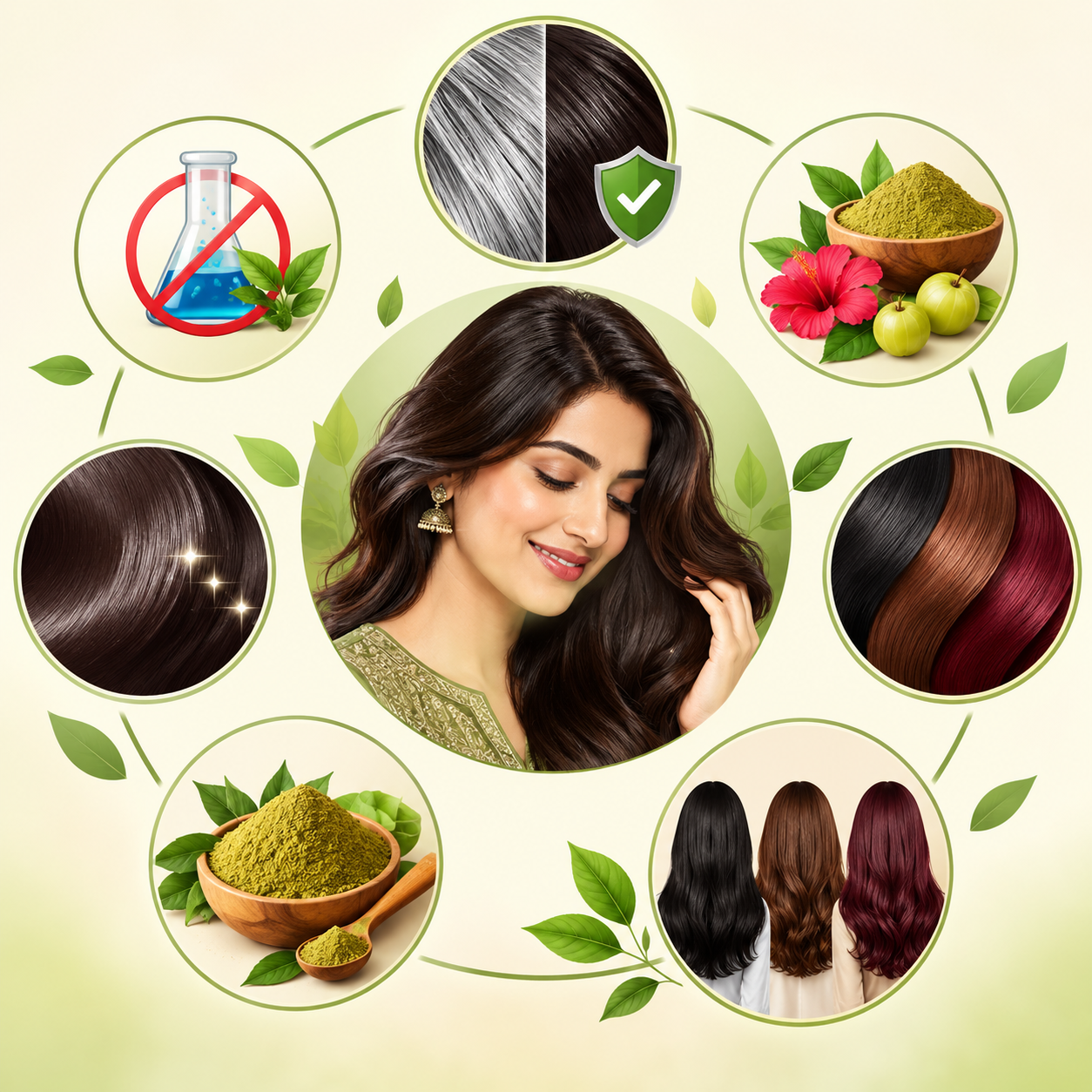
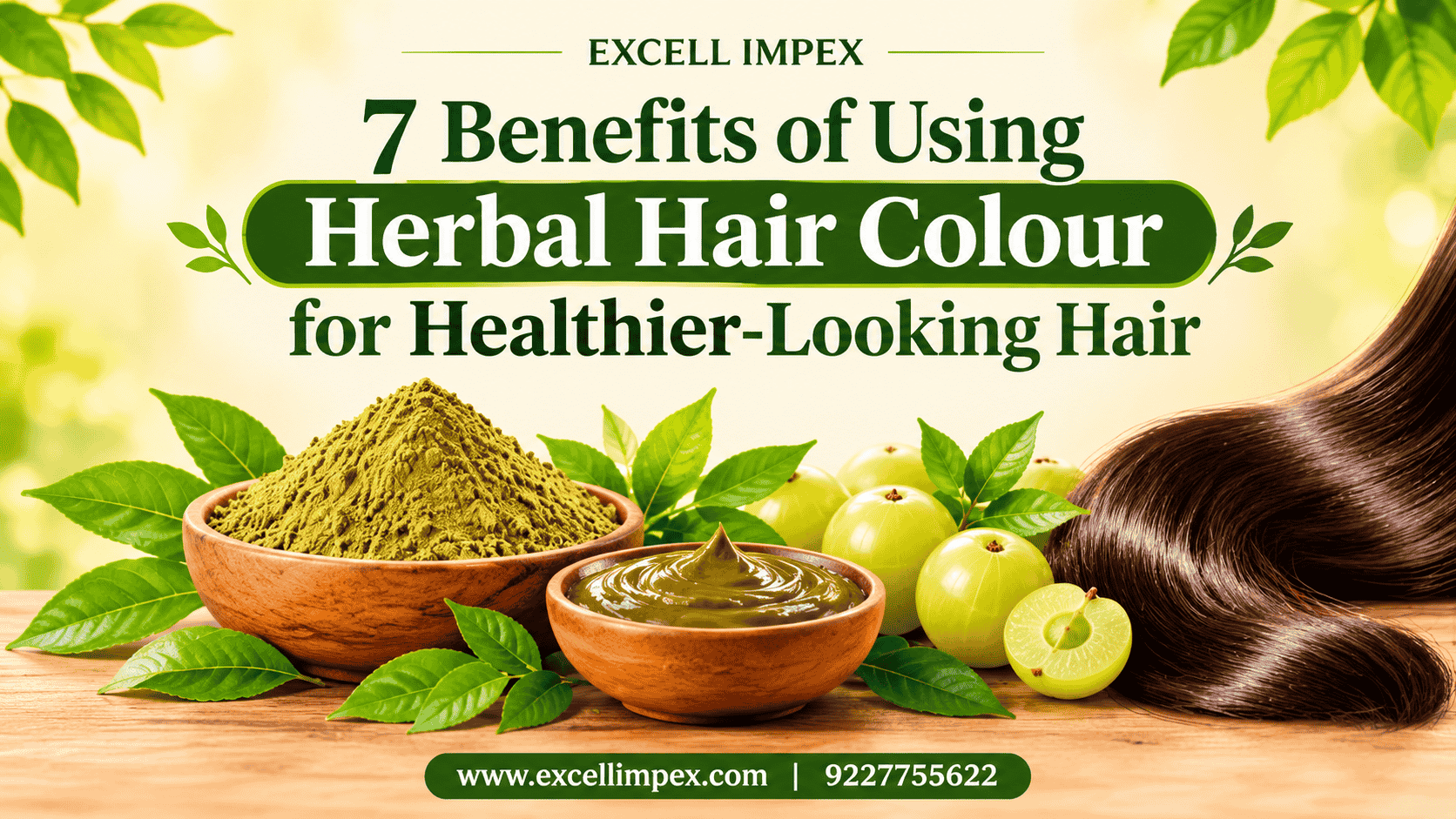
Herbal hair colour combines plant-derived colouring ingredients and, depending on the formulation, other botanical powders traditionally used in hair care. Here are seven reasons people consider herbal hair colour when choosing their next hair colour product.
1. Offers an Alternative to Conventional Hair Dyes
One of the main reasons consumers explore herbal hair colour is the opportunity to choose a different type of hair colouring formulation.
Conventional hair dyes may contain synthetic colouring agents and other ingredients involved in the colouring process. Herbal hair colour products, on the other hand, may use ingredients such as henna, depending on their formulation.
For people who pay attention to product ingredients, checking the composition of herbal hair colour can help them decide whether it matches their preferences.
However, herbal does not automatically mean chemical-free or allergy-free. Always check the complete ingredient list before choosing a product.
2. Helps Cover Grey and White Hair
Grey hair coverage is one of the most common reasons people look for hair colouring products. It is particularly relevant for adults who want to maintain a consistent hair colour as their natural hair changes with age.
Herbal hair colour products offer another option for people looking to cover visible grey and white strands.
Different formulations and colour combinations can produce different results. Consumers can explore black, brown and burgundy shades depending on their preferred appearance.
The final colour may vary according to:
- The natural colour of your hair.
- The percentage of grey or white strands.
- The formulation and colouring ingredients.
- Application method and processing time.
- Previous chemical treatments.
For a more predictable result, check the product’s shade information and follow its application instructions.
3. Contains Botanical Ingredients Used in Traditional Hair Care
Another reason people consider herbal hair colour is its use of botanical ingredients.
Henna, amla, shikakai, reetha and bhringraj are examples of ingredients associated with traditional Indian hair care. Different herbal formulations use different combinations depending on their intended purpose.
Here are some commonly used ingredients:
- Henna: A plant-derived ingredient traditionally used to colour hair and produce reddish tones.
- Amla: A botanical ingredient widely used in traditional Indian hair care.
- Shikakai: Traditionally used in hair cleansing preparations.
- Reetha: Also known as soapnut, traditionally used in hair cleansing.
- Bhringraj: An ingredient commonly associated with Ayurvedic hair care.
- Aloe vera: Used in various personal care formulations.
The presence of these ingredients depends on the specific product. Always check the packaging rather than assuming every herbal hair colour contains the same ingredients.
4. Can Help Give Hair a Shinier Appearance
Hair colour is not only about covering grey strands. Many people also want their hair to look smooth and glossy after colouring.
Some henna-based hair colour formulations are marketed with shine-related benefits. The Excell Impex Zeba range, for example, highlights hair shine alongside its colouring benefits.
The appearance of shine depends on several factors, including hair condition, the formulation used and the way the product is applied.
Choosing a suitable hair colour product and following its recommended instructions can help you work towards the appearance you want without expecting every formulation to deliver identical results.
5. Provides Different Shade Options for Personal Preferences
Not everyone wants the same hair colour. Some people prefer natural-looking black shades, while others enjoy brown or burgundy tones.
Herbal hair colour ranges are available in different shades, allowing consumers to explore options according to their preferences.
Three commonly chosen colour options include:
- Black: For people who prefer a darker hair appearance.
- Brown: For those who want a brown-toned hair colour.
- Burgundy: For consumers interested in a richer reddish-purple colour.
The final result depends on your original hair colour, product formulation and application process. Checking the shade information before purchasing can help you choose more confidently.
6. Offers Powder-Based Hair Colouring Options
Herbal hair colour powders offer a different application format compared with ready-to-use cream and liquid hair dyes.
These products generally need to be mixed according to their packaging instructions before application. This allows users to prepare the product immediately before colouring their hair.
For example, Excell Impex offers powder-based options through its Zeba Zulf-e-Henna, Excel’s Naaz and Excel’s Herbal Kali Mehandi ranges.
Before application, check:
- The recommended mixing ratio.
- Whether normal or warm water is required.
- The recommended processing time.
- Whether the product needs to be applied to clean or dry hair.
- The correct rinsing instructions.
Following the manufacturer’s directions is important for obtaining the intended result.
7. Gives Consumers More Choice When Selecting Hair Colour Products
People have different hair colouring preferences. Some prioritise grey coverage, others focus on shade selection, and some pay particular attention to the ingredients used in a formulation.
Herbal hair colour ranges provide another category to consider when comparing available products.
Instead of choosing a product only because it is labelled herbal, consumers should evaluate its actual ingredients, shade options, application requirements and product information.
This approach makes it easier to select a hair colour that suits individual preferences and expectations.
Which Herbal Ingredients Are Commonly Used in Hair Colour?
Understanding the ingredients in a hair colour product is important, particularly when comparing different herbal formulations.
Here are some ingredients found in botanical hair colour and hair care products.
| Ingredient | Traditional or formulation-related use |
|---|---|
| Henna | Plant-derived hair colouring |
| Amla | Traditional Ayurvedic hair care |
| Shikakai | Traditional hair cleansing |
| Reetha | Plant-based cleansing preparations |
| Bhringraj | Traditional Ayurvedic hair care |
| Brahmi | Traditional herbal hair care |
| Aloe vera | Used in personal care formulations |
Not every product contains all these ingredients. Their presence and purpose depend on the manufacturer’s formulation.
Herbal Hair Colour vs Conventional Hair Dye: What’s the Difference?
Both herbal and conventional hair colour products are used to change hair appearance and cover grey strands. However, their ingredients and colouring approaches can differ.
| Comparison | Herbal hair colour | Conventional hair dye |
|---|---|---|
| Ingredients | May contain plant-derived colouring ingredients | Often contains synthetic colouring ingredients |
| Colour options | Depends on the botanical formulation | Depends on the dye system |
| Application | Often supplied in powder form, depending on the product | Available in cream, liquid and other formats |
| Grey coverage | Depends on ingredients and formulation | Depends on the dye type and formulation |
| Colour results | Can vary with natural hair colour and application | Can vary with the dye system and application |
| Ingredient checks | Important before use | Important before use |
Which should you choose?
The right option depends on your colouring preferences, ingredient requirements, desired shade and expected results.
If you prefer a formulation featuring botanical ingredients, herbal hair colour may be worth exploring. If you need a specific shade or colouring technique, compare the available product formulations before making a decision.
Remember that herbal products are not automatically safer for everyone. Both categories require careful ingredient checking and appropriate use.
Explore Herbal Hair Colour Options from Excell Impex
Choosing a hair colour becomes easier when you understand the available shades and product formulations.
Excell Impex offers several hair-colouring options through its Zeba, Excel’s Naaz and Excel’s Herbal Kali Mehandi ranges. These products provide different shade choices for consumers interested in herbal hair colouring.
Zeba Zulf-e-Henna Hair Colour Powder
Zeba Zulf-e-Henna is available in three colour options:
- Black: For consumers who prefer a darker hair shade.
- Brown: For people looking for a brown hair colour.
- Burgundy: For those who prefer a burgundy-toned appearance.
The listed Zeba formulation includes Aritha powder, Shikakai powder, Henna powder and Aloe vera powder.
The product range highlights grey hair coverage and hair shine, making it an option for consumers exploring botanical hair colouring products.
Explore the available options:
Excel’s Naaz Henna Powder
Excel’s Naaz is another hair colour range available in three shades:
- Black
- Brown
- Burgundy
The product range is described as henna powder with traditional Ayurvedic conditioning ingredients. Its product descriptions highlight grey hair coverage and hair shine and texture.
Consumers can explore the available shades:
Excel’s Herbal Kali Mehandi
For consumers looking for a black hair colouring option, Excel’s Herbal Kali Mehandi is another product to explore.
Its listed herbal ingredients include:
- Amla
- Shikakai
- Tulsi
- Reetha
- Kapur
- Bhringraj
- Brahmi
The product description highlights grey hair coverage and hair shine. Its powder format is intended to be mixed before application according to the product instructions.
Explore Excel’s Herbal Kali Mehandi
Why Product Quality and Manufacturing Standards Matter in Herbal Hair Colour
The quality of a hair colour product depends on more than its shade or ingredient list. Manufacturing processes, raw material handling, consistency and quality checks also matter when selecting a product.
A manufacturer with established production facilities and documented quality-control processes can provide buyers with greater transparency about how products are made and tested.
More Than 20 Years of Manufacturing Experience
Excell Impex (Gujarat) Pvt. Ltd. was established in 2006 in Ahmedabad, Gujarat. The company began its journey in a 200 sq. ft. rented space and launched its first brand in 2007.
In 2010, it acquired its first full-scale manufacturing premises and completed its first export. The company subsequently moved to a fully owned manufacturing facility in 2011.
Today, Excell Impex operates from an owned manufacturing plant covering approximately 92,000 sq. ft., expanded in 2018.
This manufacturing journey reflects the company’s growth from a small operation into an established herbal personal care manufacturer.
In-House Quality Control and Batch Testing
Manufacturing consistency is important in hair colour products because variations in raw materials and processing can influence the final formulation.
Excell Impex describes its manufacturing process as including:
- Temperature-controlled processing zones.
- An in-house quality-control laboratory.
- A separate packaging area for private-label orders.
- In-house testing of batches before dispatch.
- Henna powder processing that includes triple sieving and batch testing for consistent dye release.
These processes form part of the company’s approach to maintaining product quality and manufacturing consistency.
Product Testing and Documentation
Quality documentation helps provide information about product characteristics and manufacturing batches.
According to Excell Impex, orders are supported by a Certificate of Analysis (COA) covering parameters such as:
- Lawsone content.
- pH level.
- Moisture content.
- Mesh size.
The company also provides a Material Safety Data Sheet (MSDS) with shipments.
These documents offer additional information about product specifications and handling, particularly for buyers who require manufacturing and quality-related records.
Manufacturing Capacity and Global Supply
Excell Impex reports a manufacturing capacity of approximately 100,000 kg per month and more than 100 million units supplied globally.
The company also reports working with over 785 distributors and serving international markets.
Its export history includes established business relationships in markets such as Singapore, Nepal, Iraq, Egypt and the UAE.
These manufacturing and supply capabilities support its work across herbal personal care product categories, including henna powder and herbal hair colour.
Learn more about Excell Impex: About Excell Impex
What Should You Check Before Choosing Herbal Hair Colour?
Before purchasing any herbal hair colour, take time to understand the product and its instructions.
Consider these points:
- Check the complete ingredient list: Understand which botanical and other ingredients are included in the formulation.
- Choose your preferred shade: Compare black, brown, burgundy and other available options.
- Understand the expected results: Your original hair colour and the percentage of grey strands can affect the final appearance.
- Read application instructions: Check the recommended mixing method, processing time and rinsing procedure.
- Follow allergy-testing instructions: Carry out the recommended patch test before every use, even if you have used the product previously.
- Check product information: Purchase products with clear manufacturer details, packaging information and usage instructions.
The US Food and Drug Administration recommends following product directions and carrying out a patch test before using hair dye. The NHS also explains that certain hair dye ingredients, including PPD, can cause allergic reactions.
Read the FDA’s hair dye safety guidance and the NHS guidance on hair dye reactions for additional information.
If you experience irritation or an allergic reaction, stop using the product and seek appropriate medical advice.
Conclusion
Herbal hair colour gives consumers another option when exploring different ways to colour their hair. From grey hair coverage and shade selection to botanical ingredients and hair shine, there are several factors worth considering before choosing a product.
The best choice depends on your preferred colour, ingredient requirements, hair condition and expected results. Taking time to compare formulations and follow application instructions can help you make a more informed decision.
With more than 20 years of manufacturing experience, an established production facility and in-house quality-control processes, Excell Impex continues to serve the herbal personal care market with products such as Zeba, Excel’s Naaz and Excel’s Herbal Kali Mehandi.
Frequently Asked Questions About Herbal Hair Colour
1. What are the main benefits of herbal hair colour?
Herbal hair colour offers plant-derived colouring options, different shade choices and an alternative to conventional hair dyes. Depending on the formulation, products may also highlight grey hair coverage and hair shine.
2. Is herbal hair colour good for covering grey hair?
Some herbal hair colour formulations are designed to help cover grey hair. However, the result depends on the ingredients, shade, original hair colour and application method. Always check the product’s expected coverage before purchasing.
3. Does herbal hair colour make hair shiny?
Some henna-based hair colour products are marketed for their shine-related benefits. The final appearance depends on the formulation and individual hair condition.
4. How long does herbal hair colour last?
The duration of herbal hair colour depends on the ingredients, formulation, hair condition, washing frequency and application method. Different products can produce different colour-retention results.
5. Can men use herbal hair colour?
Yes. Men can explore herbal hair colour products if the formulation is intended for scalp hair and suits their colouring preferences. Black and brown shades are common options for people looking to cover grey strands.
6. Which ingredients are commonly found in herbal hair colour?
Common ingredients include henna, indigo, amla and other botanical powders. Some formulations may also contain shikakai, reetha, bhringraj or aloe vera. The actual ingredient list varies by product.
7. Is herbal hair colour completely chemical-free?
Not necessarily. The word herbal does not mean that a product contains no other ingredients or is free from potential allergens. Always check the complete ingredient list and manufacturer information.
8. Should I do a patch test before using herbal hair colour?
Yes. Follow the manufacturer’s allergy-testing instructions before every use. Natural and plant-derived ingredients can also cause reactions in some individuals.